"People with intellectual disabilities deserve only one r-word: Respect"
Thanks, Ruth for sharing this beautiful video from The ARC of Virginia and The ARC of Northern Virginia. It sums up the issues well.
Thanks, Ruth for sharing this beautiful video from The ARC of Virginia and The ARC of Northern Virginia. It sums up the issues well.
Fifty years ago, babies born with developmental disabilities were routinely placed in institutions by their families under the direction of their family doctors. Health care professionals often advised families to forget the child, to have other children, and move on with their lives. It’s an appalling time in our history – babies and young children routinely abandoned and forgotten.
I think it’s important that we recognize and remember this cruel part of our history. Kay Olson from the Gimp Parade says,
“My personal thought on what happened 40+ years ago is that it was a tragedy for whole families and has undoubtedly had a lasting impact on how we view developmentally disabled people today. That is, we're still living with the legacy of those folks being segregated, made invisible, and devalued. It has impacted how we view developmental disability and the way we think of difference - we have all been taught implicitly by this history that people who are intellectually or developmentally different do not belong among us because they're dangerous, completely incompetent and lack any ability to contribute to society.”
“I think the main thing that nondisabled people don't necessarily know or understand is that developmentally disabled people are not this separate category of human beings. People tend to think, "We can do things. They cannot." And there's no line like that dividing all of us. There are shades of ability, varying talents that surface in surprising places. This is true for physical disabilities as well. Most of us, in the course of our lives, discover we have abilities or affinities for some things and lack talent elsewhere, so this idea that a certain class of people lack value or the ability to contribute inevitably underestimates and wastes a lot of human potential.”
 Disability Carnival 19: Sex and Disability
Zephyr from Arthritic Young Thing has put together some wonderful posts about this topic. As she says, “Oftentimes, people with disabilities are perceived as asexual creatures who have no sexual needs or desires. Other people assume that no one could ever desire us sexually, or that we could ever have satisfying sex lives. Many of us can and do.”
Check it out!


viernes
Today we went to the University of Costa Rica and learned about their disability service program. They have 158 students with disabilities on campus. I was very impressed with the accessibility on campus; nearly every building had a ramp. I was also impressed with how the support service seemed to want to support many types of students disabilities. They seemed very on top of things.
Later, my host family hosted a barbeque. I got to meet other host families and socialize. The things that really stand out for me is al the families' overwhelming warmth and hospitality. I love my Costa Rican host family. I will miss them very much when I leave. Tomorrow is my last day with them as we will be departing for Parque Nacional Carara. (I don't know if I'll have any internet access.)
My trip ends Thursday. I can't believe it's going so fast.
domingo
Today, Ryan and I had a very relaxing day with our host family. We first went to a lush and beautiful national park, and saw many types of animals, including deer, birds, and butterflies. Seeing and hearing all the animals was very relaxing and peaceful.
When we returned home, members of our host family's extended family joined us. We played games and chatted. They are a close family and welcomed Ryan and me as part of their family. I am amazed at how kind and welcoming Costa Ricans are.
lunes
Today we went to a government funded rehabilitation center in San Jose.
We learned a lot about the history of the center and its commitment to caring for people with disabilities. The hospital doesn't have the fanciest equipment, but it makes do. We took a tour of the different units and saw a wing where those who have operations and need physical therapy stay. (This area brought back many memories for me.)
Costa Rica has the biggest gap between the rich and the poor in all of Central America. The disability rights activists' goal is to make the hospital accessible to all people, rich and poor. The main theme of the day was that the problems lie with society's inability to accommodate the needs of people.
sábado
Today we went to two museums - The Museum of Jade and The Museum of Gold, where we learned about some of the indigenous tribes of Costa Rica. It was very interesting learning about the tribes.
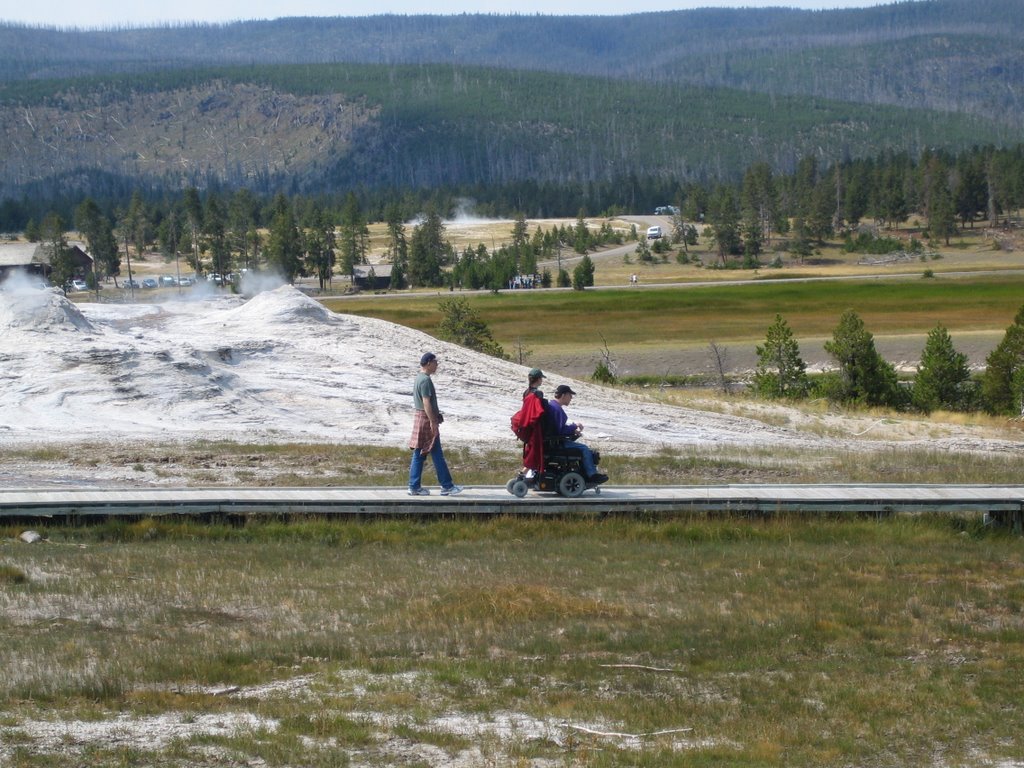
Ryan and a couple of the others helped me navigate through the many obstacles in our path.
Ryan and I did not get a chance to take a picture of the potholes just yet, but when we do, we will show them to you. Some of them are enormous. It was very challenging terrain for my wheelchair, but with the help of Ryan and some of the other group members, I managed to do fine.
Ryan and I are now in the bedroom of our host family's house. My host family has a seven year old daughter who loves to draw pictures. Tonight she drew one of Ryan and me. It's been an absolutely surprising, overwhelming, and wonderful experience.
viernes
The wheelchair would not fit in to the taxi easily. It took Ryan and I some problem solving. Annie, the personal assistant and sister of one of our group leaders, and Minor, a taxi driver spent two hours with us, translating and thinking through how to fit into the taxi. Finally we figured out a way to make it work.
Today I met my host family. They are incredibly kind. The mother's sister, who lives next door, came over to welcome us with the primary family. My host dad is a quadriplegic. My host parents have a seven year old daughter. I was overwhelmed by my host family's desire to make Ryan and me feel welcome. They are warm and beautiful people. And I look forward to getting to know them in the coming days ahead. They said they'd been hosting people with disabilities from MIUSA for 15 years.

The 15th Disability Blog Carnival will be on the theme of family and disability. Able-bodied or disabled, all children learn their value from the people with whom they spend time.
From listening to the childhood reflections of others and from my own childhood experiences, I see that the young child with a disability is like a sponge, absorbing and internalizing the feelings and actions of family and caregivers. I've put together a composite of some of these reflections.
If I’m a little child I feel love and consequently, value when:
My mother's eyes, voice, and face light up upon seeing me, rather than becoming dark, dreary, and sad.
Even if I'm not able to verbally respond, my aunt talks to me using my name, rather than about me with impersonal pronouns as though I'm not there.
My grandfather spends time with me, telling stories rather than letting me sit alone in front of the television.
My uncle casually helps me get my jacket on so we can go the park, rather than making a big fuss like I'm slowing everyone else down.
My brother listens to me when I say, "you're treating me like a baby," and responds, "you're right, I'm sorry," rather than laughing at me or ridiculing me.
My grandmother enthusiastically greets me when I come to her house, rather than complaining about the work she had to do to accommodate my needs.
My father cleans up my drool or my dirty diaper with matter-of-fact simplicity, rather than shaming me about bodily functions over which I have little control.
My caregiver seeks to understand me when I ask a question, rather than becoming annoyed with me.
My stepmother holds me with a strong yet gentle touch making me feel safe and secure, rather than with a tentative hold leaving me to feel both dirty and frightened.
My young cousins follow the example of my inclusive adult relatives, finding ways to have fun with me, rather than giving up without even trying.
My godmother learns some sign language so she can communicate with me directly, rather than relying on my parents to be intermediaries.
My parents’ longtime friend rejoices in the fact that I exist, rather than talking about what a burden I must be.
My parents correct a neighbor who laments the hardship a disabled child must bring to their lives, and articulate my value, rather than list my needs and their fears.
The child's view of himself or herself is shaped by everyday life experiences and interactions. If a child with a disability feels loved, self-love and self-worth will follow.
Update - Cicely came through her surgery well, and her mom shares the hospital experience here. The mom learned more about the ableist world than she'd care to believe is true. She also thanks everyone for their prayers.
"God is taking your burden away."
"Maybe it's for the best."
Dave Hingsburger shares a painful letter from parents who are shocked to hear these horrible comments from friends when their previously healthy little girl, Cicely, suddenly becomes very ill.
The mom asks Dave for "loud prayers" - for people to pray for Cicely and wish her and her family well.
Dave prays loudly and beautifully for Cicely, her family, and our world. "I pray that all the prayers today for Cicely, for her mother, for her father, be loud enough to shatter prejudice and bring down preconceptions. I pray that they are loud enough that barriers tumble and doors are blasted open."
Amen.
I join in prayer for Cicely, her family, and our world.

 Today is International Women's Day. In the blogging community, this day has been designated "Blog Against Sexism Day". You can learn more about the day, find statistics relating to sexism, and get links to hundreds of posts here.
Initially, I was going to show my support by just linking to the posts, but then I read the organizers' words, "We especially encourage men to challenge themselves and write about the topic." So, I've been thinking about sexism and disability. I'm familiar with and have experienced ableism. And, I think that there must be an overlap between sexism and ableism. I'm just not always sure where the line is drawn. Here are a few of my thoughts.
Had I been born a girl with a physical disability, would people react to me differently? Would strangers comment on how pretty my wheelchair is rather than how fast it goes? Would my parents get more or less "I'm so sorry” glances? Would I have been encouraged to get princess casts and splints rather than sports casts and splints? And would these and other differences have changed my self-image?
With a few exceptions, my closest able-bodied friends are people I first met when I was very young. For a child with a disability, it becomes harder to make new friends in late grade school and high school. Most of my more recent able-bodied friends are female. My female friends with disabilities tell me that most of their recent able-bodied friends are male. Why is it so hard for teenagers to form same sex friendships crossing ability boundaries?
By their very nature, both ableism and sexism put a person down, with the result often being lowered self-esteem. Ironically, my peers who are female and have a disability appear to me to be tougher and more assertive than many of my peers who are female and have able bodies. Those with disabilities seem to be far less caught up in, and even laugh at, the cultural pressures on women to conform. How does disability affect sexism?
And what about Ashley X? Would parents of a 6 year old boy with a disability have been able to convince medical personnel and an ethics committee to surgically and hormonally alter their son to stunt growth? Can a boy be a "Pillow Angel"?
I look forward to reading the other posts.
Ruth Harrigan, of Wheelie Catholic, has another website called A Different Light with fiction, essays, and poetry about disability. In this essay, she writes about a valuable and thought-provoking conversation she had when she was newly disabled with a friend who had had a disability since birth.
Check out Disability Blog Carnival 6 by Emma at The Life and Times of Emma. The theme is Disability and Relationships. I didn't submit anything this time. The entries look interesting, varied and honest. Enjoy!!
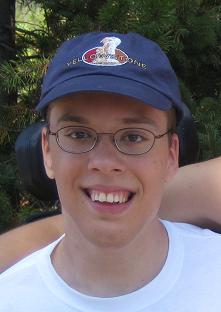
 I’ve been thinking about the connection between disability and friendship.
What makes a friend? What do I look for in a friendship? What do I like about my friends?
Well…
I look for people who like to think “outside the box” and challenge the status quo. Why do things the way they’ve always been done, just because they’ve always been done that way? People who want to make the world a better place excite me.
I enjoy people who make music. Musicians are fun people who know how to have a good time.
I enjoy watching sports and talking about sports with friends. Go Bears!
I enjoy exploring nature with friends – nothing like a hike in the woods on a fall day.
I look for people with a positive life attitude – a positive, realistic view of the world. Not sappy or phony – but a “taking the good with the bad” attitude and honestly realizing that there is so much good.
I look for people who like to learn and grow; people who are humble enough to recognize that they don’t know all the answers and who like to have challenging conversations.
I enjoy people who like to play. A game of poker with my buddies makes a fun Friday evening. And, I finally have a fantasy football team in first place!
I look for people who work hard to fulfill their passion.
I like people with a sense of humor. Laughing is fun. Ever listen to “Wait, Wait Don’t Tell Me?”
Notice that “disability” is not on my list. Some of my friends have disabilities, some don't. It's not a factor.
But much of society has it on their list.
Some people, both peers and adults, have avoided me because of my “outside” – perhaps my drooling, being in a wheelchair, limited use of my hands. Others, perhaps deluding themselves into thinking they were “open-minded”, talked down to me or were my “friend” only when convenient for them.
A visible disability presents superficial “differences”. But, it’s the inside qualities that matter in real friendships. We can share so much in common with each other, but we need to get to know what’s on the inside to find out. Seeing a person simply as his or her disability is a roadblock to a real relationship, and, sadly, both people end up missing out.


 Subscribe to my feed


